Why we deliver written scopes before any code
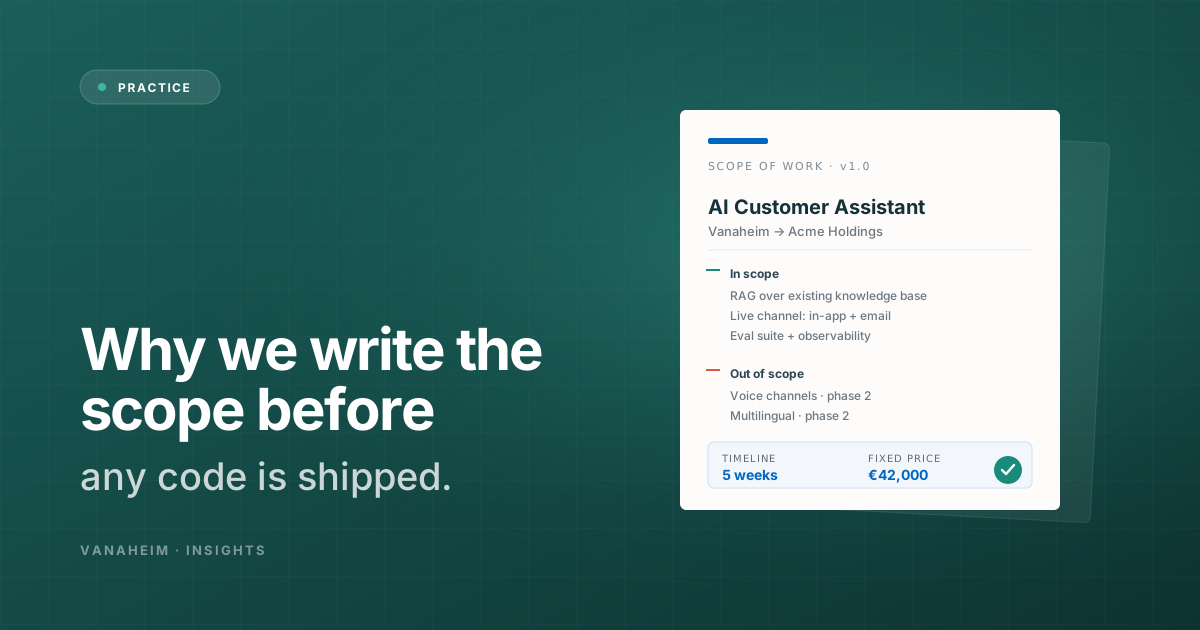
The default contracting model in custom software development is time-and-materials. The client pays for hours, the agency tracks them, and the project ends when the budget runs out or someone calls it. It is the default for a reason — it is the easiest contract to write — but it punishes both sides.
The agency is paid to be slow. Every hour billed is revenue. There is no incentive to ship in three weeks what could be billed for eight. The client knows this, so they hover. They request status updates, ask for time-trackers, and burn their own attention budget watching for waste they cannot easily detect anyway.
Fixed price requires honest scoping
Fixed-price flips the incentive. The agency is paid for an outcome, not for time, and is therefore motivated to ship efficiently. The client gets a predictable budget. Both sides spend their attention on the work instead of on each other.
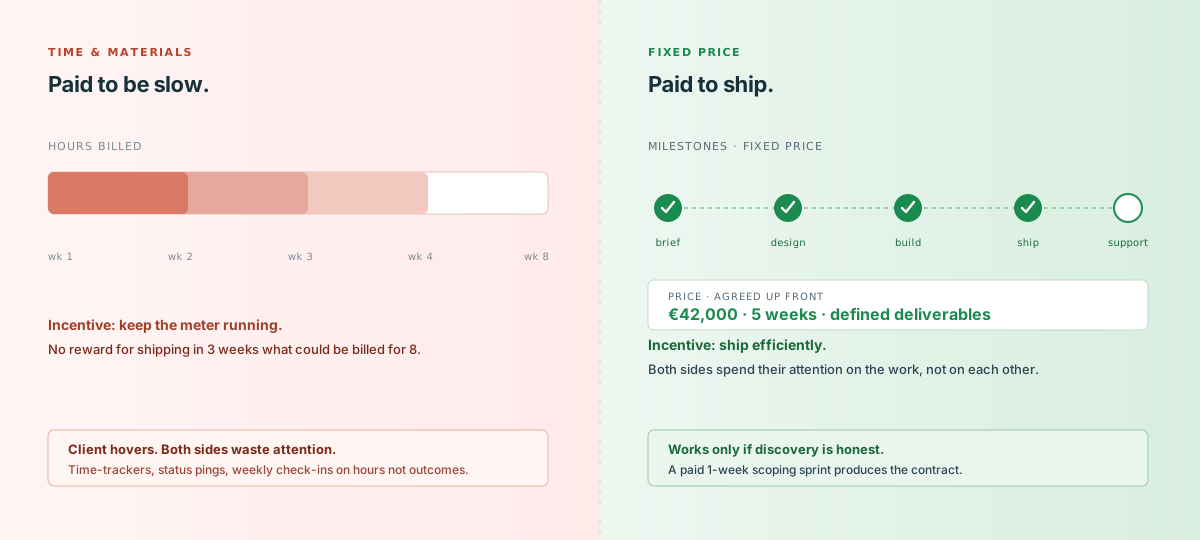
The catch is that fixed-price only works if the scope is honest. Most fixed-price contracts collapse because the agency under-scopes (and then either eats the loss or fights for change requests) or over-scopes (and then under-delivers because there is no incentive to do more). The discovery process exists specifically to avoid this trap.
The discovery sprint is a small fixed-price project whose deliverable is a larger fixed-price contract.
What discovery actually produces
A discovery sprint is one to two weeks of paid scoping work. It produces a written document containing: the problem in plain language, the proposed solution architecture, an explicit list of what is in and out of scope, milestone breakdown with deliverables, and a fixed price for the build. The client owns this document regardless of whether they continue with us.
Two things are non-obvious about this. First: the discovery deliverable is itself useful. Clients who go on to build with another team have told us the document was a more honest scoping exercise than the work that came after with the team they hired. Second: the discovery acts as a filter. About a third of the projects we scope do not proceed to a build — usually because the discovery surfaced that the project was too small, too speculative, or already partially solved by something off-the-shelf. Both sides save the larger commitment.
Time-and-materials still has a place. It works for ongoing operations, evolving roadmaps, or genuine R&D where the goal is exploration. But for any project with a clear definition of done, fixed-price after honest discovery is the better contract for both sides.
More from the studio.
Designing agentic systems that don't lose the plot
Most production AI agents fail not on capability but on context handling. A short note on how we structure agent state for reliability.
Read article →Integration is product
The unsexy middleware between your CRM, ERP, and inbox is often the single highest-leverage thing a software team can build.
Read article →Want to talk about your project?
Tell us what you’re working on. We’ll respond within a business day.